
Let’s talk about Texas
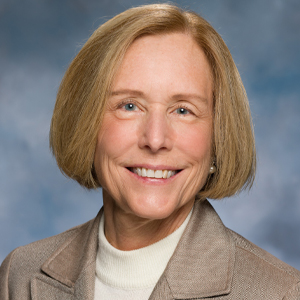
Discover BMB, the annual meeting of the American Society for Biochemistry and Molecular Biology, will be held next year in San Antonio, a historic, culturally diverse city with many lovely attractions and affordable lodging. It’s located in a state that is home to leading research and teaching institutions — and more than 500 ASBMB members.
And, yes, San Antonio is in Texas.

A message from San Antonio's visitors bureau
Learn how San Antonio “nurtures its diversity and inclusivity.”
In my 30-plus years as an ASBMB member, I’ve come to appreciate how informed and politically astute members of our community are. You know that Texas politicians are making national headlines by stripping away abortion rights and targeting the LGBTQIA+ community. And then there are the guns.
You know that policies enacted at the state and local levels across the U.S. affect the lives and careers of our members. They also influence scientists’ decision-making when it comes to attending conferences.
I’m writing to you today because I understand your concern about gathering in Texas next year.
In the early 1970s, the ASBMB founded committees focused on the advancement of women and marginalized scientists. For more than half a century, the society has spoken up and put its money where its mouth is by funding travel awards, scholarships, awards and mentoring. Pouring money into a state with leaders who are actively harming members of our community doesn’t align with our values or our public statement on diversity, equity and inclusion.
The ASBMB Council selects meeting sites years in advance. As president, I am responsible for the good stewardship of the society’s funds. I understand the many factors that go into picking a meeting site, and I understand the decision to stick it out.
In hindsight, what’s happening in Texas and elsewhere today isn’t all that surprising, but none of us can foretell the future.
As we prepared for Discover BMB 2023 in Seattle, we asked groups of members how we could better meet their needs in future meetings. They told us repeatedly that the cost of flights to and hotel rooms in coastal cities is prohibitive and that we need to be more open-minded about locations if we want entire labs to be able to attend, which of course we do.
Texas is known as the Lone Star State, but Texas is not alone when it comes to laws reducing individual rights and freedoms. Almost every day, we hear another state or locality has enacted policies targeting women and marginalized people.
California now prohibits state-funded travel to states with discriminatory laws. As of today, that list includes 24 states, and Texas is among them. The way things are going, more than half of the states in the nation might be on the list by 2024. And that’s not counting states where lawmakers are attacking academic freedom by eliminating tenure and diversity and education programming.
If we decide not to meet in any of these states, we cut ourselves off from much of the country. And we give up a chance to show up and show solidarity with members and colleagues whose work and study have brought them to live, day in and day out, under these laws.
For a long time, institutions in the southern and middle regions of America have received less federal research grant funding than those on the coasts. That’s on top of the decades-long defunding of state institutions. In light of growing efforts to make voting more difficult and to gerrymander districts, the disparity and disinvestment are likely to deepen, even if it is unpopular with voters. Bioscientists who need to stay, for whatever reason, will be forced to do their best with even less.
The ASBMB provides resources for its members to engage with legislators at the state and local levels. I encourage all our members to take advantage of them. Elected officials need to hear from you about your experiences and concerns. They need to know how state and local policies affect your ability to recruit students and faculty, for example, or for your family’s ability to access needed health care. They need to know if you feel unsafe going about your life.
All of this is to say that I too am concerned about Texas. I worry about the safety and well-being of our members who live and work there. I worry about their family members, friends and neighbors. I worry about the future of science in Texas.
When we meet in San Antonio next year, all of us must show our solidarity with Texas scientists, women and members of the LGBTQIA+ community.
The ASBMB Meetings Committee is committed to making our gathering an inclusive space for all who attend. To this end, the Maximizing Access Committee, the Women in BMB Committee and the Public Affairs Advisory Committee are teaming up to create opportunities for us to demonstrate our commitment to scientific and social progress and to advocate for policies that protect academic freedom and the most vulnerable
I look forward to sharing more details in a future column. And in the meantime, I invite you to share with me your suggestions for gestures of support.
Enjoy reading ASBMB Today?
Become a member to receive the print edition four times a year and the digital edition monthly.
Learn moreGet the latest from ASBMB Today
Enter your email address, and we’ll send you a weekly email with recent articles, interviews and more.
Latest in Opinions
Opinions highlights or most popular articles
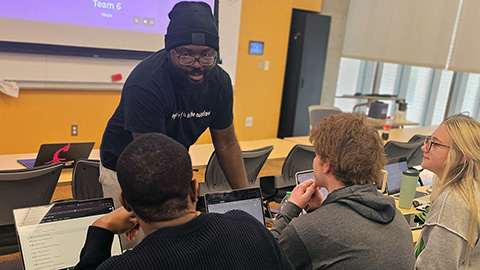
Learning can be fun: Gaming anatomy and physiology
Instructors explore how gamification and active learning transform student engagement and retention. They convey how emotion, interaction and design can make even rigorous subjects more effective and memorable.

Mentorship and uncertainty: Lessons from Telemachus
A biochemistry educator reflects on mentorship through the Greek story of Telemachus, showing how embracing uncertainty, failure and curiosity can transform teaching.
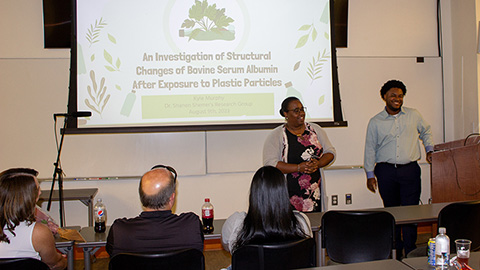
Embracing the twists and turns along the educator pathway
A biochemistry educator reflects on the challenges of early faculty life, describing how evidence-based teaching, cross-disciplinary collaboration and classroom challenges shaped her growth.
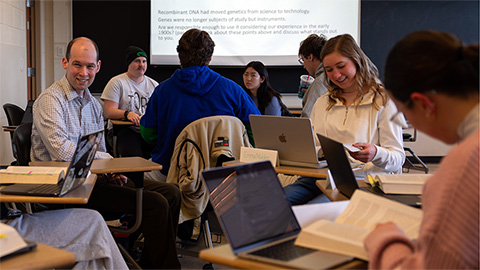
Redesigning with students in mind
Assistant professor reflects on how the shift to online teaching revealed gaps in points-based grading and led to a redesign centered on transparency and student growth.
Teaching beyond information transfer
Educator reflects on moving beyond lectures to create a biochemistry classroom centered on engagement, transparency and student ownership, showing how small shifts like “student hours” and active learning can transform understanding.
Mayday! Lessons from cellular dysfunction and group work dynamics
An upper-level biology course revealed that strong science doesn’t guarantee strong teamwork. One instructor shares how failed group dynamics reshaped their approach, leading to more structured, collaborative and effective student learning.